Is House-Hacking Still A Thing?
Here’s what I think
Not too long ago, house-hacking was all the rage.
It was sold as the savvy—yet simple—approach to homeownership and wealth building.
And people bought in.
(Lots of people).
The strategy was boiled down to the following:
Purchase a 2 - 4 unit property or a single family home with an ADU.
Occupy one of the units and rent out the others.
Utilize the rental income to offset the mortgage.
Ultimately, you’re able to scratch homeownership off of the to-do list; plus eliminate - or drastically reduce - your largest living living expense.
For a long time the math penciled out.
Take a look at this example as proof:
This is 1432 Grant Street - a fourplex in Berkeley.
It sold for $1.8M in November of 2020.
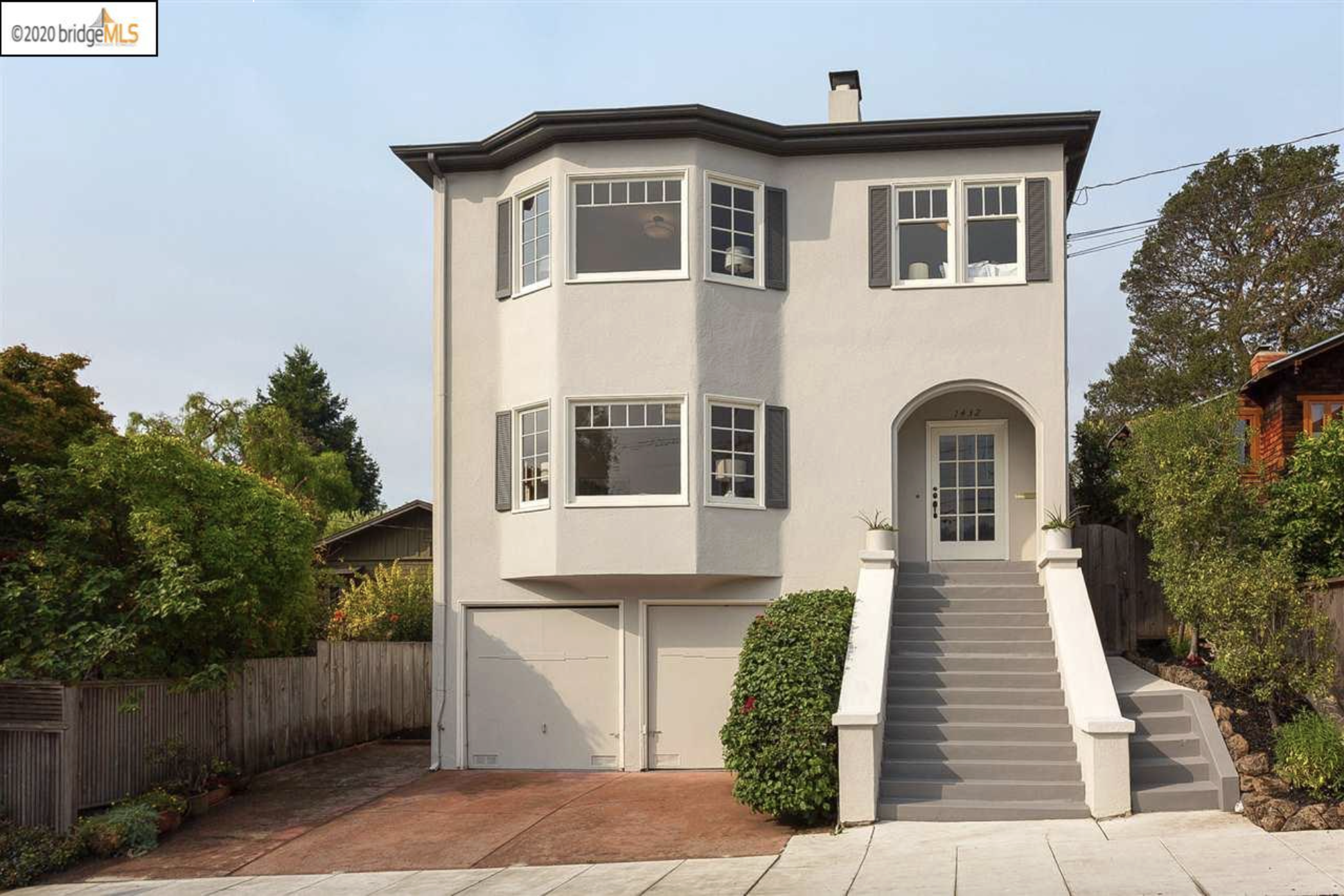
At the time that it sold, the average fixed-rate 30-year mortgage was 2.72%.
With a 5% down payment, the buyer’s mortgage payment would have been less than $7,000 ($6,954) before insurance and taxes.
At a conservative rent rate of $2,500 / month, the property owner is practically living for free.
But we all know what’s changed since then: Interest rates have skyrocketed.
Back in 2020, interest rates were hovering between 2.7% and 2.9%.
Now they’re sitting at 6%.
If you were to buy this same building with 5% down tomorrow, your principal and interest would come out to $10,252.
As you can see, the economics are much different now.
Even with all three of the other units rented at $2,500, the owner would still have to come up with over $2,750 every month.
So with all of the napkin math out of the way, we return to the question at hand:
Does house-hacking still work?
Despite how it looks on paper, the short answer is still, yes.
But it works much differently now.
The days of putting down 5% or less and living mortgage free are behind us.
Depending upon the purchase price of the property, you’ll need to bring at least 15 - 30% to the closing table.
This turns a $50,000 downpayment on a $1M duplex into $150 - $300K.
If we were to circle back to the Grant Street example, you’d have to put down more than $600,000 to bring your monthly payment below $7K.
Obviously, this is a steep increase.
But for those that can swing it, the house-hacking dream is yours for the taking.
And I don’t say that lightly.
Look at how the market has changed. . .
In November of ‘20, 1432 Grant Street hit the market for $1.4M.
It was on the market for only 9 days before it sold for $400K above ask ($1.8M).
But if we look at Alameda county as a whole today. . .
The average days on market has more than tripled.
The typical listing sits for nearly 30 days before receiving an accepted offer.
And almost 40% of all listings sold for less than their original asking price in December of ‘25.
In a nutshell, the market has softened.
From 2020 - ‘22 competition was stiff.
Most listings would receive multiple offers, end up in a fierce bidding war, and ultimately sell far above ask.
Interest rates were low, but prices peaked.
Now, the pendulum has swung to the buyer’s side.
With sales volume hitting rock bottom, buyers and investors have much more pull at the negotiation table.
Whether it’s a price cut, credit, or concession, some sellers are willing to bend over backward to get their property sold.
So if you still have the house-hacking itch, now may be the time to scratch it.
As Buffet once said:
Be greedy when others are fearful, and fearful when others are greedy.
The feeding frenzy that took the housing market by storm from 2020 to ‘22 is over.
The swells of crowds that once packed open-houses and property tours to the brim, have subsided. Most buyers and investors have become too scared to take advantage of the buying window that’s opened up.
This leaves the door wide open to those that are looking to seize the moment.
Now is the time to secure exceptional properties at bargain prices.
If you’ve been patiently waiting on the sideline, but you may be ready to take your shot, send me a message.
I’ve compiled a list of which zip codes have produced the best buying opportunities, versus which areas have remained red hot.
Here’s the link: send a message
If you found value in this piece, please pass it along.
If you have any questions, click here to send a message.